Photos
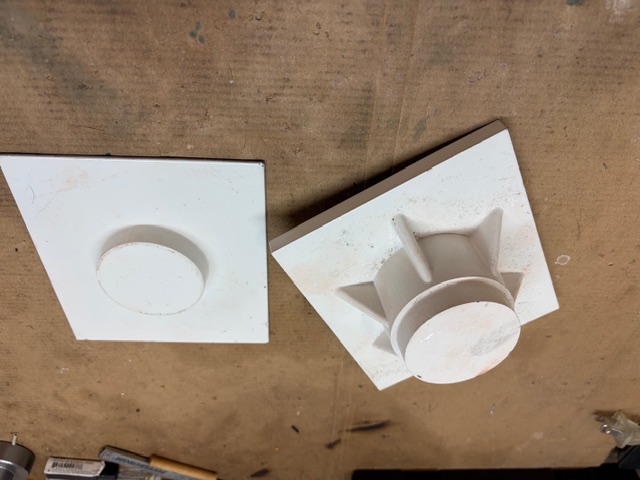
These are the cope and drag patterns used for the mold. A key feature is the cylindrical projection located at the center of the cope pattern. This forms a matching circular recess in the cope sand during molding. That recess serves an important purpose—it acts as a core print, providing a positive locating and support point for the core that forms the central hole in the casting.
The core produces the internal bore of the center plate. It was made using a 3D-printed mold, packed with a mixture of fine sand and sodium silicate binder. Once packed, the mold assembly was placed in a sealed plastic bag and exposed to carbon dioxide gas. The CO₂ reacts with the sodium silicate, curing and hardening the sand into a rigid, self-supporting core.
After the core was prepared, the external mold was formed in the usual way using the cope and drag. The hardened core was then carefully positioned in the mold cavity, the mold assembled, and the setup prepared for pouring.
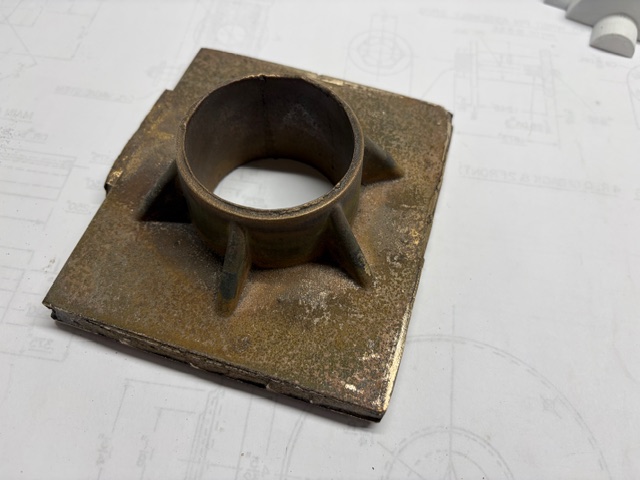
The large central bore—formed by the core—is clearly visible. Its clean formation and alignment are a good indication that the core was properly positioned and supported during the pour.